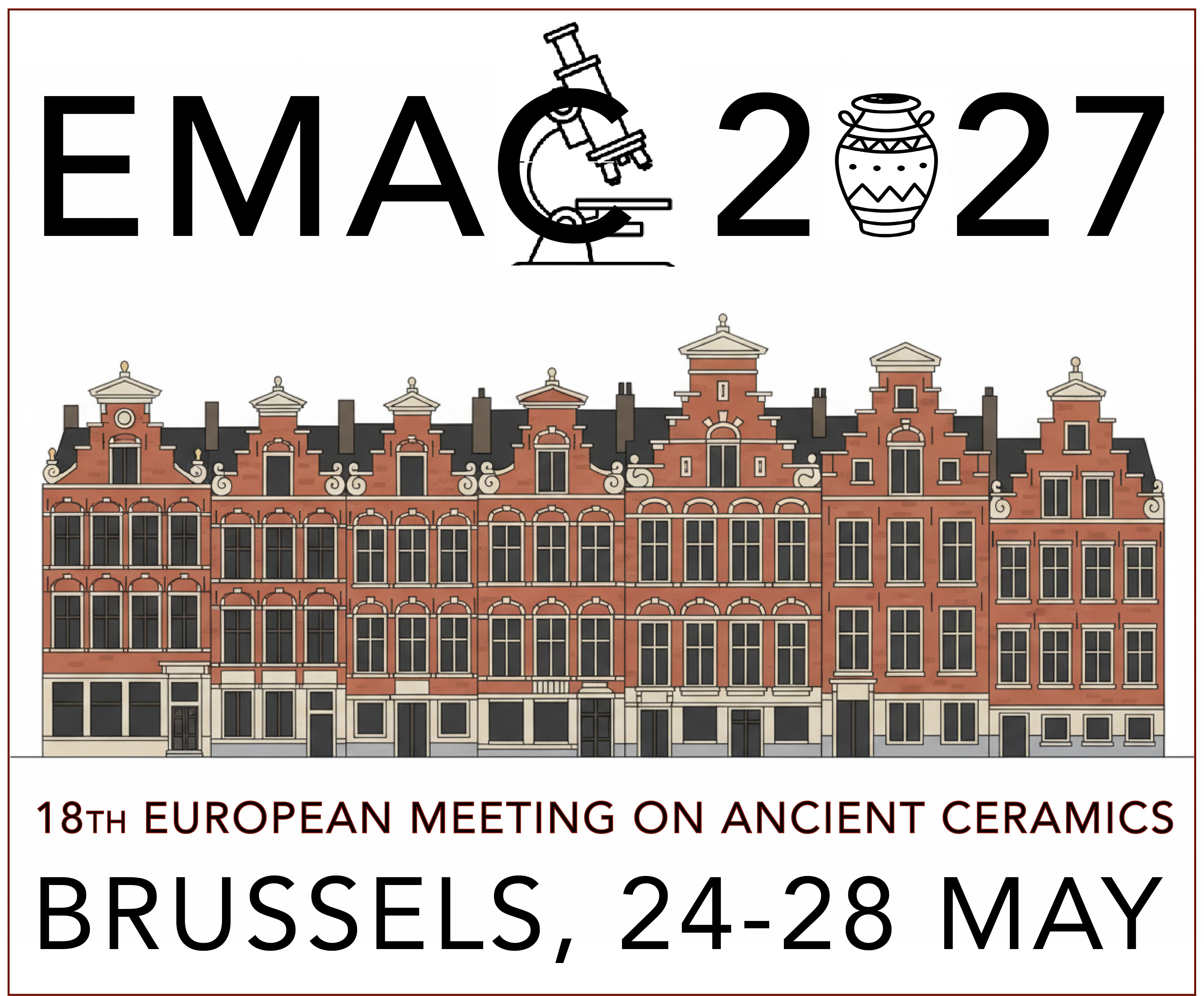
EMAC2027 : 18th European Meeting on Ancient Ceramics
Brussels (Belgium)
24-28 May 2027

EMAC2027 : 18th European Meeting on Ancient Ceramics
Brussels (Belgium)
24-28 May 2027
The European Meeting on Ancient Ceramics (EMAC) stands as a preeminent biennial conference dedicated to fostering interdisciplinary collaboration between the humanities and the sciences. It promotes integrated methodologies for the archaeometric analysis of archaeological ceramics, encompassing issues of provenance and exchange networks, craft traditions and mobility, function and use, and post-depositional alteration.
The 18th EMAC is organised by Université catholique de Louvain - Campus Saint-Louis Bruxelles (UCL-SLB), in collaboration with the Royal Museums of Art and History (RMAH) and Université de Namur (UNamur). In line with the fields of expertise of the three host institutions, the goal is to explore how archaeometric ceramic research can contribute to deepen our knowledge of cultural heritage and to engage with the most pressing cultural issues of our time.
Following its inaugural meeting in Rome in 1991, which focused primarily on Ancient Mediterranean pottery, the EMAC conference series has expanded to include global studies of ancient to modern pottery, architectural terracotta, and coroplastic works. Subsequent conferences have been held in different European cities, each show-casing a major center of archaeological ceramic research. EMAC has imposed itself as a vital forum for scholarly exchange, connecting established academics with the next generation of researchers. In recent years, the conference has prioritized innovative analytical developments and advanced laboratory methods in the archaeometry of ceramics. Furthermore, the organisation of a specialised summer school has reinforced EMAC’s commitment to academic mentorship, ensuring the continued evolution and scientific rigor of the field.
The 18th EMAC invites contributions that leverage archaeometric ceramic research to deepen our knowledge of past communities, and that highlight the need for the preservation of their cultural heritage. Through a panel of 8 thematic sessions listed in the "Scientific Program" section, the conference will explore various aspects of ceramic traditions, from production to use, and the societal conditions that underpin them. Special attention will be brought to provenance and technological studies, as well as to the mobility of people, products, and ideas in "local", "glocal", and "global" interaction settings. It invites gendered approaches to craft traditions; case studies discussing processes of innovation vs tradition; decolonising research; and investigations on the complex interplay between human communities and their natural environment. The conference will also show-case the latest advances in laboratory and portable techniques, and it encourages presentations on datation and authentification methods of museum pieces. Through these thematic sessions, EMAC 2027 seeks to align scientific research on archaeological ceramics with contemporary societal debates.
EMAC 2027 is organised by Université catholique de Louvain, in collaboration with the Royal Museums of History and Art and Université de Namur. The scope and program of the conference reflect the combined expertise of the three host institutions:
The EMAC conference will take place in Brussels on May 26 – 28, 2027. The venue for the oral and poster sessions will be UCLouvain – Campus Saint-Louis Brussels. A keynote lecture by Dr. Michela Spataro (British Museum, London) followed by a gala dinner, will take place at the Royal Museums of Art and History on the evening of May 27th. Each day will conclude with informal social events designed to foster networking and discussion.
The conference will be preceded by a two-day « Lab-and-Museum School » on May 24 – 25. It will include laboratory training sessions, hands-on exercises on ceramic assemblages from museum collections, and guest lectures on targeted case-studies and new developments in the archaeometry of ceramics. Special attention will be brought to methodological aspects of designing a pluridisciplinary research project, and to the critical role of (geological, archaeological, historical) contextualisation of analytical data. Participants will visit the Department of Geology at Université de Namur and the Royal Museums of Art and History in Brussels, offering a unique chance to engage with leading Belgian research institutions.
Important Dates:
End of Summer 2026: Call for abstracts, call for participation to the "Lab-and-Museum" school open; information regarding registration (fees, categories, deadlines) will be available on the website.
January 2027: Notification of acceptance
 Loading...